
What I Learned Using Vence Virtual Fencing, Post-Wildfire
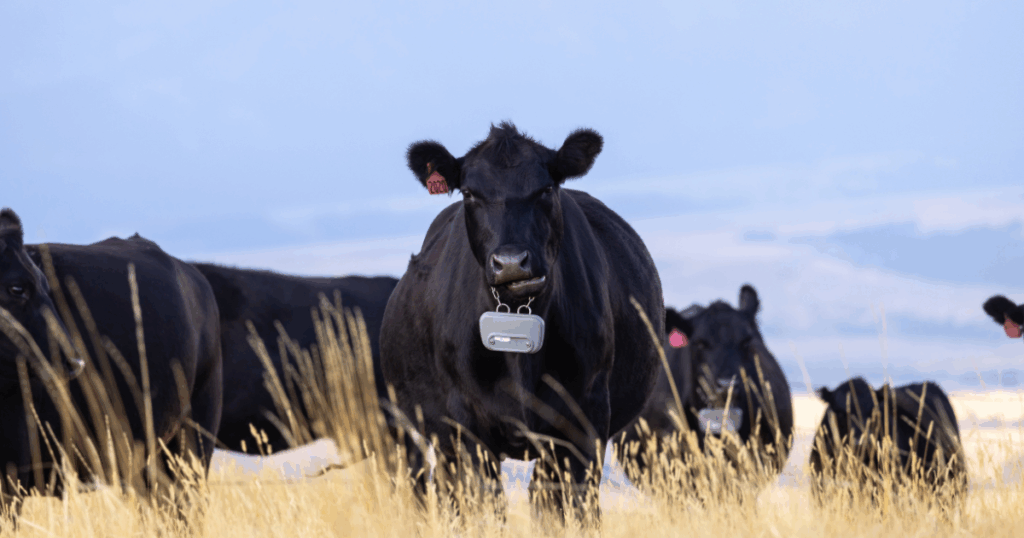
When wildfire tore through our allotments last summer, we were forced to make quick decisions. The Twentymile Fire (July 25, ~4,100 acres) and the Basin Fire (August 5, ~6,000 acres) left behind scorched landscapes that we primarily depend on for winter grazing, as well as one allotment that also serves as summer pasture.
The timing and terrain put us in a bind. With the Oregon Trail, a county road, and natural gas pipelines running through, traditional fencing wasn’t an option. We faced two choices: step away for two years to allow reseeding recovery, or try something new. Our Range Con suggested virtual fencing.
We were hesitant. As most ranchers know, technology comes with its own challenges, but we also knew this was our only chance at still using the unburned ground. That’s when we decided to give Vence virtual fencing a try—an innovative tool that’s now become a vital part of how we manage post-wildfire grazing.
How Vence Virtual Fencing Supported Post-Wildfire Grazing
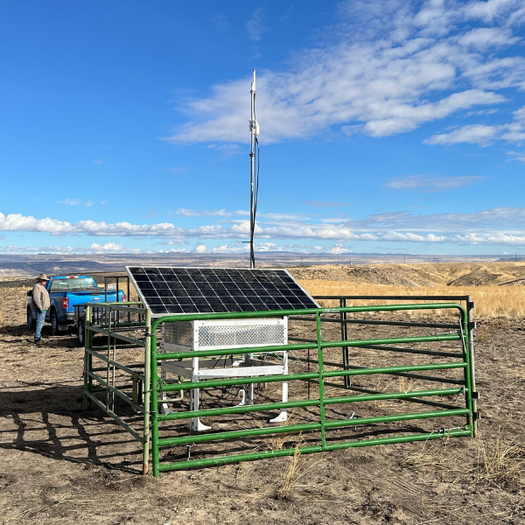
We started conservatively, collaring 150 head while moving the rest to leased ground or other pastures. Due to our terrain, only one base station was required. Our BLM office loaned us the station (and a trailer to move it), and even sent staff to help assemble collars on setup day.
Vence’s Success Manager, CK Wisniewski, also came to the ranch. She walked us through everything, from assembling the collars to a detailed explanation of the software. I’ll be honest: the first week felt overwhelming. But once we got through the four-day training process, it started to feel second nature.
Collaring 150 head isn’t a small feat. It took extra hands and about 1.5 hours just to prep collars with batteries. We purposely collared younger cows, betting they’d adapt to change more easily, and that decision worked well for us.
Lesson 1: Cow Behavior & the Learning Curve
I was surprised at how quickly cattle learn. The training process is systematic:
- Day 1: hard fence + Vence boundary
- Day 2: move Vence 10m inside the fence
- Day 3: introduce warning tones
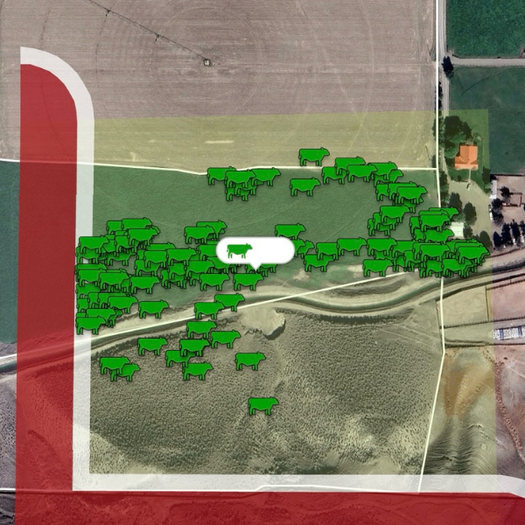
- Day 4: cut the pasture virtually in half
Within less than a week, our cows were moving and responding just as if the Vence line were a physical fence. That adaptability saved us far more headaches than I expected.
Lesson 2: Cost-Benefit Trade-Offs
On paper, the math made sense. Collars run about $40/year plus batteries at $10 each. Our 150-head setup is penciled at $6,000 for collars and another $1,500–$ 3,000 for batteries. A base station costs about $12,500, though in our case, we were able to borrow one.
Compare that to a new fence, which averages about $24,000 per mile, or the cost of winter hay (27 lbs/day for 90 days = $176/cow, or $26,427 for 150 head).
Suddenly, Vence wasn’t just our only option; it was the smartest one.
Lesson 3: Limitations & Boundaries
This system isn’t perfect. Vence cannot replace hard perimeter fences. It also doesn’t prevent cattle from mixing with other collared or non-collared herds.
Pre-planning is also essential. Moving cows, shifting the base station, and working with Vence support are all things that must be planned in advance, not something that can be thought about and then acted upon in the same 60 seconds. However, knowing the limitations has been half the battle. Once you accept what it can and can’t do, you can design your grazing plans around it.
Lesson 4: Regenerative & Ecological Benefits
While our immediate goal was fire recovery, I can see Vence as a tool with long-term potential:
- Rotational grazing becomes far more flexible
- Breeding season management is easier in larger allotments
- Seasonal moves can be done without setting permanent infrastructure
The biggest benefit? The data! Collars track how, when, and where cattle graze, and that insight is turning us into better stewards of our livestock and of our natural resources.
Final Reflections
A year ago, I was skeptical that virtual fencing could work in real ranch conditions. Today, I can’t imagine getting through post-wildfire recovery without it.
- Cows were quick learners.
- Costs stacked up in our favor.
- Ecological outcomes gave our pastures a fighting chance to recover.
- The limitations kept us honest—Vence is a tool, not a silver bullet.
If you’re staring at a blackened landscape and wondering how to keep your herd grazing, my advice is simple: don’t rule out virtual fencing.
It takes planning, patience, and a little faith in your cows—but for us, it turned out to be the difference between losing two years of grazing or keeping our operation moving forward.
Are you loving what you're reading? If you want to see more, sign up for my email list! I'm all-in on sending intentional emails filled with motivation, life hacks, and all the stuff you never knew you needed!